Trade and crafting
Loot and drops
How a loot table turns into gold and items, what metal drops where, and how Luck decides it.
Every enemy and every treasure pile points at a loot table. The tables are in the loot table database, each with what it is used for, and each enemy’s table is on its page in Enemies. Each dungeon type also has a treasure table, shown on Where enemies appear.
What a table rolls
A table has a gold range and a percentage for each kind of item: weapons, armour, magic items, clothing, books, religious items, and six groups of ingredients (two of plants, three of creature parts, and two of miscellaneous).
- Gold. The game picks a number inside the table’s range. On a corpse that gold is then divided by your level and multiplied by a random number from 1 up to your Luck divided by 10, so it no longer grows as you level.
- Each kind of item gets its own roll against its percentage. The plant and the first two creature-ingredient percentages are first multiplied by the dropper’s level.
- A success rolls again at half the chance, then half again, so a table with a 50% weapon chance gives at least one weapon half the time, a second one in eight times, and so on.
What metal drops
Weapons and armour no longer scale to your level. The metal is rolled from your Luck and from where you are:
- In the wilderness the roll is lowered by 10 to 19 first, so drops are mostly iron and steel.
- In a dungeon the kind of dungeon sets a quality: covens and volcanic caves are the best, then desecrated temples and dragons’ dens, vampire haunts and barbarian strongholds, crypts and orc strongholds, laboratories and harpy nests, and giant strongholds. Human strongholds, prisons and ruined castles use your level up to 15. Natural caves, mines, spider and scorpion nests and cemeteries have no bonus at all.
- On a shop shelf the shop’s quality level lifts the roll.
- Luck adds to every roll, and a lucky roll can unlock the higher metals.
The actual chances, by place and Luck, are in Drop material odds. Armour is leather, chain or plate by a separate roll; plate uses the same metal ladder.
Daedra and orcs have a chance to carry their own metal on top of that: a  Daedra Lord, a
  Daedra Seducer, a Fire or
 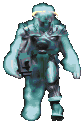 Frost Daedra or a
 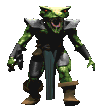 Daedroth may drop a daedric piece, and an
 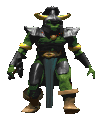 Orc Warlord, Shaman, Sergeant or an Orc may drop an orcish one. Luck raises the chance.
Creature parts match the creature
This game narrows a creature-ingredient roll to a curated list for the monster that dropped it, so an imp cannot hand you a unicorn horn. A tier that has nothing on a monster’s list still rolls but gives nothing.
Enemy equipment
What enemies carry and wear is rolled by their class: archers get bows and a blade, fighters a big weapon or a sidearm and a shield, mages a staff and robes. Every worn piece starts at 30 to 75% condition. An orc’s ebony or better is orcish four times in five, and a warlord’s mithril or better the same. Every class’s kit is in Enemy kits.
Magic items in loot come from the enchanted item templates in the game’s MAGIC.DEF file.
Category: Trade and crafting